Upper Trishuli 3A
- Page status
- Working page
- Updated
- 2026-08-30
Summary
Upper Trishuli 3A is a 60 MW operating NEA run-of-river plant on the Trishuli, with NEA generation data showing performance below its high design-energy assumption.
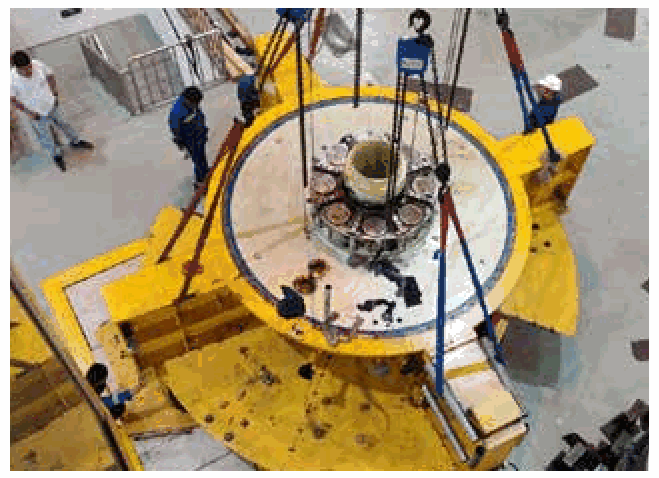
60 MW · operating · on the Trishuli · in Rasuwa and Nuwakot districts.
Specifications
| Parameter | Value |
|---|---|
| Capacity | 60 MW |
| Status | Under construction |
| Registry licence | Generation |
| River | Trishuli (Gandaki Basin) |
| District | Rasuwa |
| Province | Bagmati Pradesh |
Sources
Specifications (NEA FY 2081/82)
Upper Trishuli 3A is NEA's second-largest plant by annual design energy (489.76 GWh) despite only 60 MW of installed capacity — a reflection of the Trishuli River's high and relatively stable discharge. Two 30 MW vertical Francis units operate at 70% probability of exceedance as a pure run-of-river plant (not peaking RoR — it runs on whatever the river provides).
| Parameter | Value |
|---|---|
| Type | Run-of-river (ROR) |
| Units | 2 × 30 MW Francis |
| PE design basis | 70% POE |
| Design generation | 489.76 GWh/yr |
| FY 2081/82 generation | 356 GWh |
| FY 2081/82 vs design | 72.7% |
| FY 2081/82 vs target | 78% |
| Year-over-year change | −17% |
| Cumulative lifetime generation | 2,391.5 GWh |
| Districts | Rasuwa and Nuwakot, Bagmati Province |
For the first time in FY 2081/82, NEA's in-house maintenance team overhauled both Units 1 and 2 — a significant operational milestone that included repairs to draft tube gates, inlet valves, and head covers. Radial gates received major maintenance with seal, plate, and rail bar replacements. SCADA systems and communication links were restored with sensor and PLC upgrades, and pre-monsoon civil works included concrete repairs and gabion spur construction near the tailrace.
The 73% Problem — Why Design Energy Fails Here
At 72.7% of design generation, Upper Trishuli 3A has the lowest design-performance ratio in NEA's large-plant fleet alongside Chameliya (77.3%). Compare:
| Plant | MW | % of Design (FY 2081/82) | Type |
|---|---|---|---|
| Middle Marsyangdi | 70 | 107.6% | PROR, glacier-fed |
| Kali Gandaki A | 144 | 102.5% | PROR with pondage |
| Marsyangdi | 69 | 97.0% | PROR |
| Chameliya | 30 | 77.3% | PROR, major construction failure |
| Upper Trishuli 3A | 60 | 72.7% | ROR, high-design-energy |
The 489.76 GWh design figure is aggressive for a 60 MW plant — it implies a plant load factor of ~93%, which would place it among the highest PLFs in the global hydro fleet. At 356 GWh actual, the PLF is ~68% — still respectable for a RoR plant but dramatically below the design assumption.
This is the Q-Design Discharge problem at NEA scale. A plant built on 70% POE hydrology with a 93% PLF design has almost no margin for actual seasonal variability. The 17% year-over-year decline (FY 2080/81 to 2081/82) suggests the hydrology assumption was tested and failed.
The Flood Event — Climate-Resilience in Real Time
On the morning of 2081/03/24 at approximately 4:30 AM, a sudden flood caused by intense rainfall in the upper catchment sent uncontrolled water and debris into the dam premises. Because there was no early warning system, several key structures were affected before operators could respond.
Damage summary:
- Diversion Radial Gate-1: ~1.5 m of lower gate skin plate detached; control panel and hydraulic unit submerged
- Gates 2, 3, and 4: structurally intact but currently inoperative due to damaged hydraulic systems
- Gate-2's pressure unit submerged; Gate-3's hydraulic cylinder broken
- Stoplog gantry crane and lifting mechanism damaged
- Control building, piers, staff quarters, and operating platforms impacted by debris and silt deposition
- Gate operating panels, motors, and sensors submerged
No human casualties were reported. But the event is a real-world test of what Nepal's RoR fleet faces as rainfall intensity increases in the Himalayan catchment. The missing early warning system — flagged in the NEA's own incident report — is the operational gap that climate-resilient design would need to close across the fleet. See GLOF Risk and Buildability for the broader infrastructure-resilience context.
August 2026 — workers trapped in the underground powerhouse
The 26 August 2026 Bhote Koshi avalanche flood hit the plant again, this time far more severely: the Ministry of Energy described a special operation to reach the underground powerhouse after the cable-tunnel entrance was buried, with NEA's acting managing director citing 40–45 people unaccounted and the Army drilling through debris with technical teams. See Kathmandu Post — Hundreds feared trapped in hydropower tunnels after Bhotekoshi flood (2026) and Bhotekoshi–Trishuli Flood 2026. The contrast with the 2025 event is instructive: headworks damage alone left operators able to respond, while a burial event severs the access path that rescue — and recovery — depend on.
Significance — NEA's Highest-Design-Energy RoR Asset
Upper Trishuli 3A's design energy (489.76 GWh from 60 MW) reflects what the Trishuli River basin can deliver: reliable, year-round baseflow from a catchment that drains the Langtang-Helambu massif. At 356 GWh actual, it still delivers more energy per MW than any other NEA RoR plant — a function of basin hydrology, not engineering superiority.
But the plant also shows that no RoR asset, regardless of basin quality, can guarantee its design energy. The 489.76 GWh target is the high-end assumption; 356 GWh is reality. The gap between them is the structural reason Nepal's RoR-heavy fleet cannot close the Seasonal Mismatch without storage — even in its best basins.
Limitations & Controversies
The page corrects stale registry status using NEA operating data, but its analysis is still bounded by the FY 2024/25 annual-report snapshot and does not include a full hydrology series, post-flood recovery data, or independent engineering review of the early-warning gap.
See also
- Q-Design Discharge — why 72.7% of design is a structural signal
- Seasonal Mismatch — the system problem even a well-sited RoR cannot fix
- Buildability — how flood events test infrastructure resilience
- GLOF Risk — the broader hazard context for Himalayan RoR headworks
- Gandaki Basin — basin context; the Trishuli feeds the Narayani
- Run-of-River Hydropower