Trishuli
- Page status
- Working page
- Updated
- 2026-05-11
Summary
24 MW · operating · on the Trishuli · in Nuwakot district.
Specifications
| Parameter | Value |
|---|---|
| Capacity | 24 MW |
| Status | Operating |
| Registry licence | Operation |
| River | Trishuli (Gandaki Basin) |
| District | Nuwakot |
| Province | Bagmati Pradesh |
Sources
- NEA Transmission Annual Book 2077
- NEA Annual Report FY 2024/25
- JICA IPSDP Final Report Annexes (Vol. 2)
Specifications (NEA FY 2081/82)
Trishuli is Nepal's oldest operating hydropower plant, commissioned in 1967 with Indian government funding. Originally 21 MW (7 × 3 MW units), it was rehabilitated in 1995 to 24 MW with six 3.5 MW Francis units and one 3 MW standby unit. As a peaking run-of-river plant on the Trishuli River in Nuwakot, it has anchored the Kathmandu Valley grid for nearly six decades.
| Parameter | Value |
|---|---|
| Type | Peaking run-of-river (PROR) |
| Original capacity (1967) | 21 MW (7 × 3 MW) |
| Current capacity (post-1995 rehab) | 24 MW (6 × 3.5 MW + 1 × 3 MW standby) |
| Peaking capacity | 21 MWh |
| Design generation | 163 GWh/yr |
| FY 2081/82 generation | 97.7 GWh |
| FY 2081/82 vs design | 60.0% |
| FY 2081/82 vs target | 81% |
| Year-over-year change | −17% |
| Cumulative lifetime generation | 6,031.9 GWh |
| District | Nuwakot, Bagmati Province |
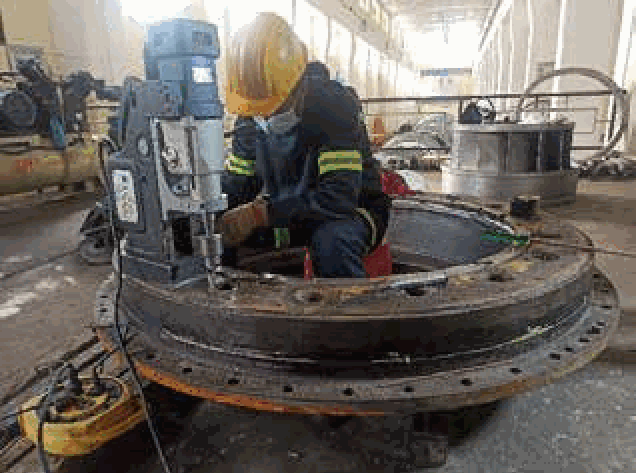
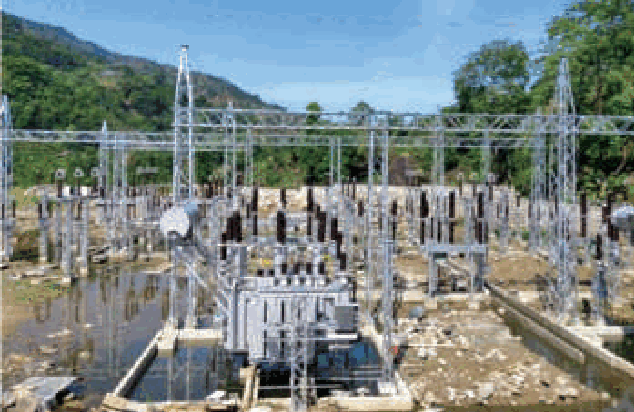
In FY 2081/82, Trishuli completed significant rehabilitation work: a 10 MVA (66/11 kV) and an 18 MVA (6.6/66 kV) transformer were installed, tested, and commissioned. A 6.6 kV, 3000A switchgear and a 400V, 300A LT AC panel were also commissioned. The auto guide vane closing system was modernized and redesigned across all units for improved overspeed protection — a critical safety upgrade for a plant running 1960s turbine hardware.
Powerhouse maintenance covered rotor shaft work on Unit 1, bearing repairs on Units 2, 5, and 6, MIV repair on Unit 2, and oil cooler installation on Unit 1.
The Heritage Plant — 58 Years and Counting
Trishuli was commissioned when Nepal's grid barely existed. At 21 MW, it was the first major power source serving Kathmandu — and for years, it was the grid. Over 58 years, it has accumulated 6,031.9 GWh of lifetime generation, roughly a third of Kali Gandaki A's lifetime output from one-sixth the capacity, purely because it has been running for 35 more years.
The 1995 rehabilitation — from 21 to 24 MW — was Nepal's first major hydropower upgrade. The current rehabilitation program (transformers, switchgear, digital governors, overspeed protection) is the second round. At 58 years, the question is not whether Trishuli needs another rehab but whether the electromechanical core — turbine runners, generator windings, penstock integrity — can sustain another upgrade cycle or whether the plant is approaching end of economic life.
This is the aging-fleet extreme case. Every rehabilitation argument applied to Kali Gandaki A (22 years old) and Marsyangdi (36 years old) applies to Trishuli at nearly triple the age. The plant that Nepal's grid was built around is also the plant that demonstrates, more starkly than any other, what Himalayan hydro looks like at 60 — and whether another round of rehab is technically possible, financially justified, or a signal that NEA needs a replacement strategy for its oldest assets.
60% of Design — The Fleeting Rehab Benefit
Trishuli's 60% design-performance ratio is the lowest in the NEA fleet. At 97.7 GWh from a 163 GWh design, the rehab that raised capacity from 21 to 24 MW in 1995 did not prevent progressive output decline. The 17% year-over-year drop (FY 2080/81 to 2081/82) suggests the decline is continuing.
This is the structural problem: a 60% PLF at 24 MW compares unfavorably with even the private IPP median. The current rehab — new transformers, digital switchgear, modernized overspeed protection — addresses electrical and control infrastructure but does not touch the hydraulic core: turbine runners, guide vanes, penstock lining, intake structure. Those are the components where 58 years of sediment-laden Himalayan river flow accumulates surface wear and geometric erosion.
The parallel is Chameliya Hydropower: a plant built at extreme cost that underperforms due to engineering failures. Trishuli is the inverse — a plant built at low cost for its era that is now underperforming due to decades of normal wear. Both end up in the same place: a generation asset that delivers substantially below what the nameplate promises. See Installed MW, Energy, Seasonality, and Firm Power Are Routinely Conflated.
Limitations & Controversies
Aging-fleet extreme case. At 58 years, Trishuli is Nepal's oldest operating hydropower plant. The 1995 rehabilitation raised capacity from 21 to 24 MW, but FY 2081/82 generation was only 60% of design (97.7 GWh vs 163 GWh). The current rehab addresses electrical infrastructure but not the hydraulic core — turbine runners, guide vanes, penstock lining — where 58 years of sediment-laden Himalayan flow accumulates wear.
End-of-economic-life uncertainty. The question is not whether Trishuli needs another rehab but whether the electromechanical core can sustain another upgrade cycle. At some point, replacement becomes cheaper than continued rehabilitation, but no public replacement strategy exists.
Progressive output decline. The 17% year-over-year drop (FY 2080/81 to 2081/82) suggests the decline is continuing. Even after rehab, Trishuli's 60% PLF is the lowest in the NEA fleet and compares unfavorably with the private IPP median.
Rehab does not address hydraulic wear. New transformers, switchgear, and digital governors improve reliability and safety but do not restore the turbine hydraulic efficiency lost to decades of sediment abrasion. This is a fundamental limitation of electrical-only rehabilitation on aging Himalayan plants.
See also
- Kali Gandaki A — the next plant in the aging-fleet trajectory
- Marsyangdi — 36-year-old fleet anchor, approaching its own rehab decision
- Chameliya Hydropower — the construction-failure counterpoint
- Installed MW, Energy, Seasonality, and Firm Power Are Routinely Conflated — nameplate vs delivered energy
- Buildability — execution risk across the project lifecycle
- Gandaki Basin — basin context; the Trishuli feeds the Narayani
- Run-of-River Hydropower