Tanahu Hydropower Project
- Page status
- Working page
- Updated
- 2026-11-04
Summary
A 140 MW storage-type reservoir scheme on the Seti River and the most advanced large reservoir project under construction in Nepal. The NEA FY 2024/25 baseline reported about 67% physical progress; a later April 2026 public update reported roughly 75%, and NEA's FY 2025/26 annual report puts it at about 78% across the three construction packages (NEA Annual Report FY 2025/26, PDF pp.13, 16). ADB's current project record also exposes audited financial statements, contract utilisation and environmental and social monitoring, allowing progress to be tracked by package rather than by a single headline percentage.
Specifications
| Parameter | Value |
|---|---|
| Capacity | 140 MW |
| Status | Under construction — ~78% NEA FY 2025/26 (mid-July 2026); ~67% in FY 2024/25 |
| River | Seti (Gandaki Basin) |
| District | Tanahu |
Engineering
A 140 m RCC dam with an underground powerhouse — the only large dam-and-reservoir project actually in active construction in Nepal. Tanahu is proof-of-concept: if it completes, Dudhkoshi Storage Hydroelectric Project and Budhigandaki Hydroelectric Project become easier to finance because the conversation no longer begins "Nepal has never built a large reservoir since 1982."
| Parameter | Value |
|---|---|
| Dam height | 140 m |
| Dam type | RCC |
| Underground powerhouse | Yes |
| Type | Storage |
| Owner | Nepal Electricity Authority (NEA) |
Governance
ADB-financed, NEA-owned, and shadowed by two Accountability Mechanism complaints (2024 and 2025) over land and buffer-zone compensation. The complaints flag untitled-land registration, free prior informed consent, and demarcation issues. See Buildability.
| Parameter | Value |
|---|---|
| Lead financier | Asian Development Bank |
| Developer | NEA |
Schedule
Roughly 67% complete in the NEA FY 2024/25 reporting baseline, with a later public progress update placing it around 75% in April 2026. ADB's 2013 appraisal estimated completion by 31 December 2020. Its current project record shows that Loan 2990's original 30 June 2021 closing date has been revised to 30 December 2028. These are schedule and financing milestones, not proof of commissioning; package milestones and commissioning evidence should be used instead of extrapolating a completion date from the headline percentage.
| Parameter | Value |
|---|---|
| Completion | ~78% in NEA FY 2025/26; ~75% in Apr 2026 public update; ~67% in FY 2024/25 |
| Appraisal completion estimate | 31 Dec 2020 |
| ADB Loan 2990 closing | Original: 30 Jun 2021; revised: 30 Dec 2028 |
Current Status
As of 30 July 2026: under construction. The ADB project remains active and publishes financial, procurement and safeguard records. The wiki does not treat the April 2026 percentage as proof of commissioning or infer a commercial-operation date from it.
| Dimension | Current position | Evidence |
|---|---|---|
| Physical delivery | Major packages under construction; roughly 75% in the April public update | Tanahu Hydropower Progress Update (April 2026) |
| Finance | Active ADB project; FY 2024/25 audited project statements disclosed January 2026 | ADB project documents |
| Safeguards | Ninth Panel of Experts report disclosed April 2026 | ADB project documents |
| Operation | Not commissioned | Project monitoring record |
Recent Updates
| Date | Update |
|---|---|
| Jul 2026 | ADB's current project record showed Loan 2990's revised closing date as 30 December 2028 |
| Apr 2026 | ADB disclosed the ninth environmental and social Panel of Experts report |
| Apr 2026 | Public progress update placed overall physical progress at approximately 75% |
| Aug 2026 | NEA FY 2025/26 annual report: about 78% complete across three construction packages |
| Jan 2026 | ADB disclosed audited project financial statements for FY 2024/25 |
Active Blockers
| Blocker | Prevents | Monitoring basis |
|---|---|---|
| Remaining package and integration works | Commissioning | Package-level construction record |
| Land, compensation and environmental-management issues | Completion with safeguard compliance | Current ADB monitoring and Panel of Experts reports |
| Schedule slippage beyond earlier loan dates | Reliable commercial-operation forecast | Revised ADB timetable |
Significance
Tanahu matters less for its nameplate 140 MW and more as proof of concept — is Nepal capable of delivering a large reservoir project at all, on a reasonable timeline, with multilateral financing? Until Tanahu commissions, the only operating storage plant in the country is Kulekhani Cascade (106 MW). Tanahu will nearly triple the storage fleet on day one.
The strategic implication cascades upward. If Tanahu completes, Dudhkoshi Storage Hydroelectric Project (670 MW) and Budhigandaki Hydroelectric Project (1200 MW) become easier to finance: the next multilateral conversation no longer begins "Nepal has never actually built a large reservoir since 1982." If Tanahu fails — especially on the social-compliance dimension the Accountability Mechanism is reviewing — future large storage proposals will carry that memory as a risk premium.
Compare Tanahu (140 MW, reservoir, ADB, domestic) to Arun 3 (900 MW, peaking RoR, SJVN-India, export-oriented). Both are under construction but solve different problems: Tanahu addresses dry-season Firm Power for Nepal; Arun-3 adds monsoon export capacity to India. Nepal's structural energy problem is the former, not the latter.
Limitations & Controversies
Social-compliance complaints. The 2024 and 2025 Accountability Mechanism filings are the visible surface of a harder question: can a large reservoir in the middle hills be executed with buffer-zone demarcation, untitled-land registration, and free prior informed consent done properly? Current complaints flag all three. ADB accepted the 2025 complaint for eligibility review in April.
Schedule discipline. Roughly 67% physical progress after ~10 years of construction is slower than comparable multilateral-financed projects elsewhere; a later April 2026 public update put progress around 75%. Each additional year compounds NEA's dry-season Firm Power exposure, since the entire medium-term planning rationale for Tanahu depends on it arriving before the Seasonal Mismatch pressure peaks.
Not a basin-scale answer. Even at full output, Tanahu cannot close the dry-season gap on its own. It is one node in a portfolio that would need Dudh Koshi Storage, Budhi Gandaki or similar scale to operate alongside. Framing Tanahu as "the storage solution" sets up disappointment; framing it as "the first storage receipt" sets up a reasonable expectation.
Official Visual References
Tanahu's current public photo trail is still messy from a reuse and licensing standpoint, but the project overview deck circulated by Tanahu Hydropower Limited in 2016 does include two official visuals that are materially better than generic Seti River scenery.
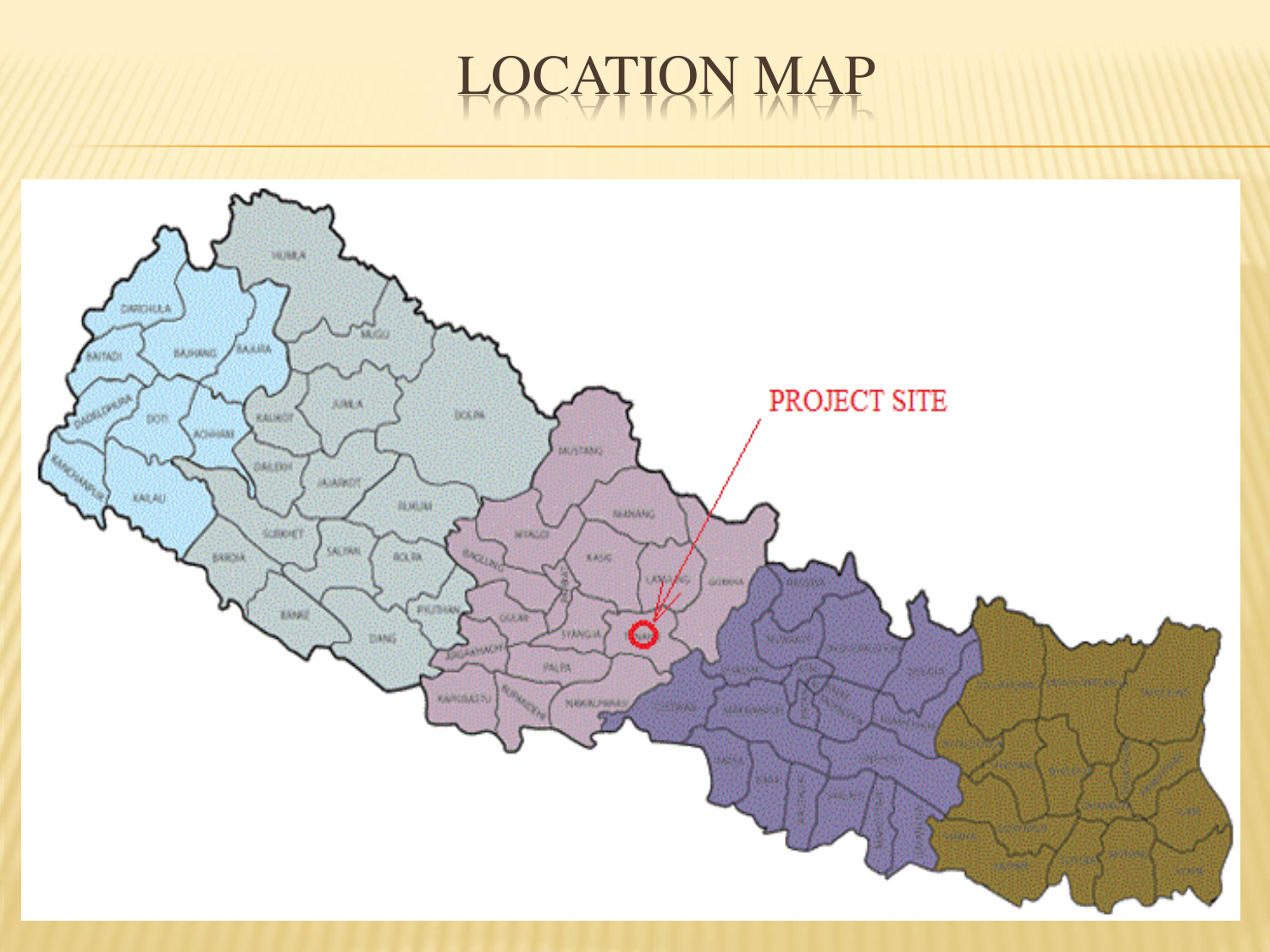
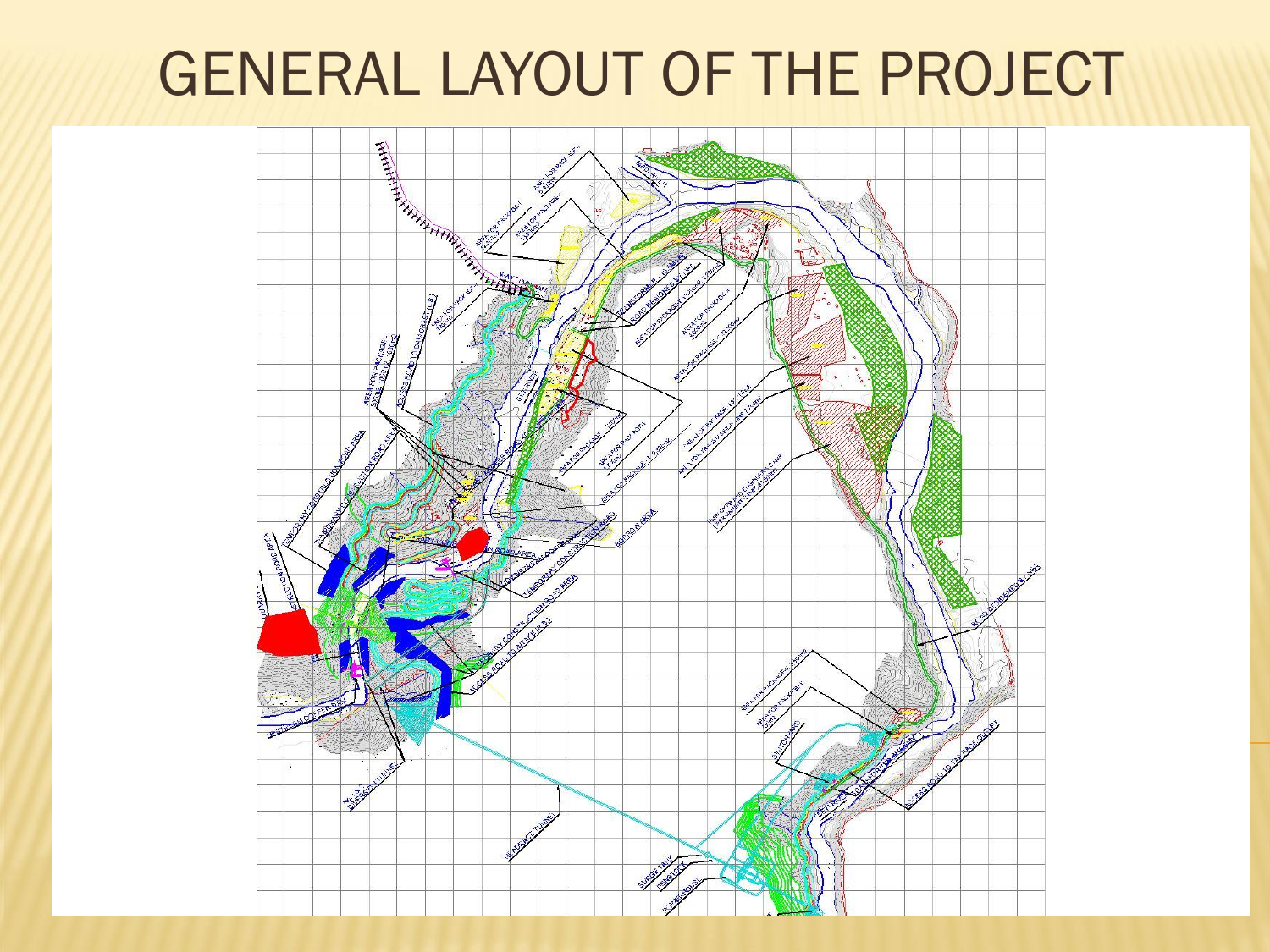
Source: An Overview of Tanahu Hydropower Project (PDF)
Related
- Storage Deficit — what Tanahu begins to address
- Buildability — Tanahu's progress suggests storage is difficult but not impossible
- Kulekhani Cascade — the only current storage asset
- Firm Power
- Dudhkoshi Storage Hydroelectric Project
- Budhigandaki Hydroelectric Project
